
At your first appointment, your orthodontist will meet you and assess you. The assessment includes a clinical examination, an X-ray if needed, and a discussion.
For younger patients who don’t have all their adult teeth, we can advise parents on the ideal timing for treatment and what to expect.
A full assessment is carried out for adolescent and adult patients who are ready to start treatment. Any necessary X-rays are taken (usually one) along with clinical photographs.
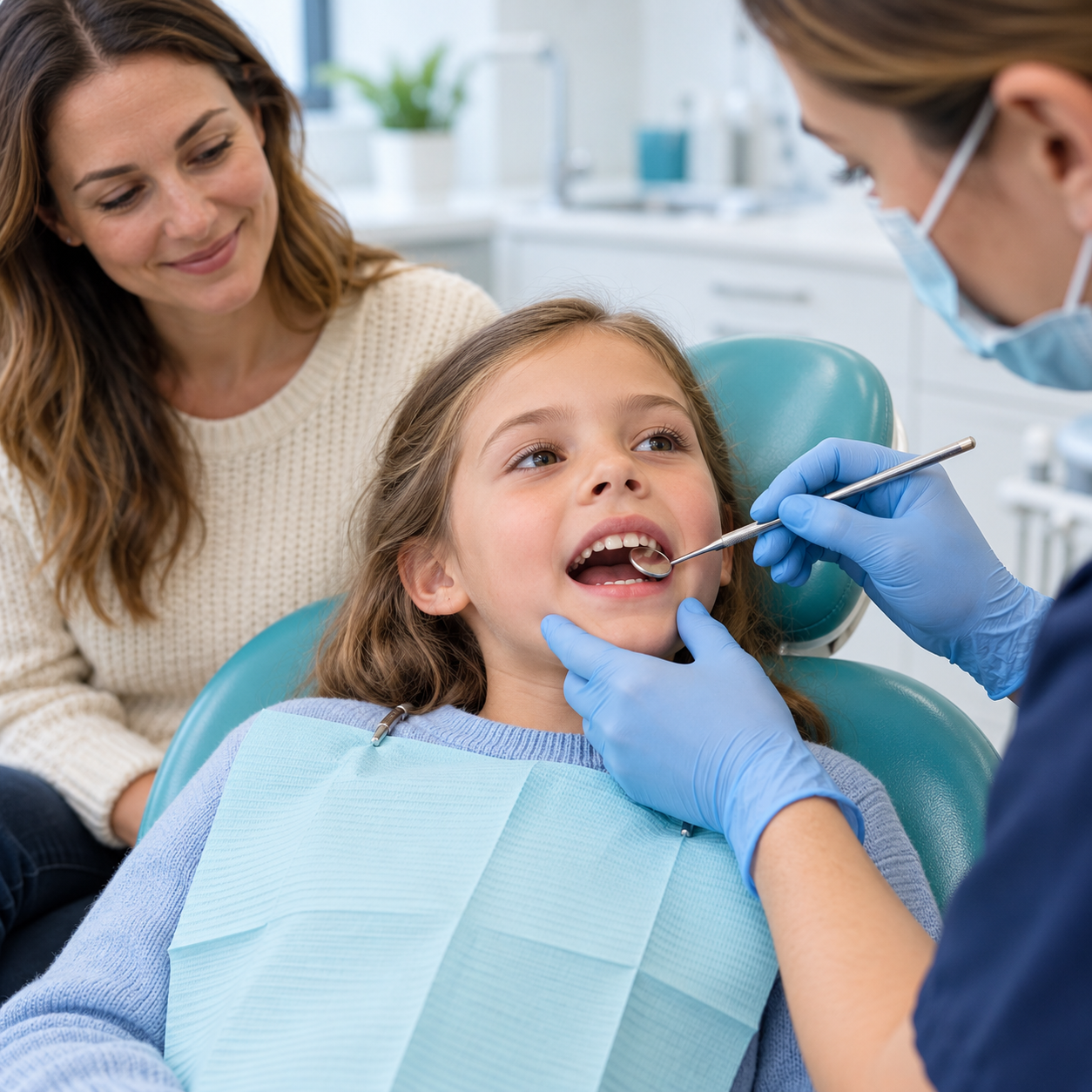

A full diagnosis will be made and treatment options discussed. Information on costs and methods of payment will be provided.
No, it’s not a big problem unless something is digging into your gum or cheek. Phone the practice and we will let you know if you need to come in sooner or if it can wait until your next appointment.
No, a special gel is put on the teeth and they are simply washed and dried before placing the brackets on the teeth. A day or two after the brace goes on, some patients experience a dull ache as the teeth get ready to move. There isn’t much that can be done about this other than take some paracetomol and it usually passes after 2 or 3 days. For the majority of patients it’s quite mild but sometimes a softer diet is needed.
Treatments usually last 18 months to 2 years, occasionally patients can finish treatment sooner as teeth don’t all move at the same rate. If you needed teeth out as part of your plan, your treatment will usually last at least 18 months. Treatment for some growing patients who need a functional brace followed by a fixed brace will typically last 2 years.
You will be a given a date to take the brace off and you need to come to the practice twice on that day – an early appointment to take the brace off and a later appointment to have removable retainers fitted. You will also have photographs taken at the end of treatment.
Retainers are full-time wear for 3 months and then nights only for another 15 months. This is the minimum 18 month retainer wear following treatment. We know that some people are more prone than others to having their teeth move if they stop wearing retainers, so it’s ideal to continue wearing them on alternate nights going to bed on a long-term basis. Long term can be as long as you want to be sure the teeth stay straight. If at some point, you stop wearing retainers completely the teeth can move.
*Your policy may contribute towards orthodontic treatment at Oriel Orthodontics. Check with your insurer to find out what you can claim.







Our aim is to provide the highest standard of orthodontic treatment using top quality materials in a relaxed but modern clinical environment.
Oriel Orthodontics,
64 Castletown Road,
Dundalk,
Ireland,
A91 T10F